Organizer
Prof. N. Ravichandran
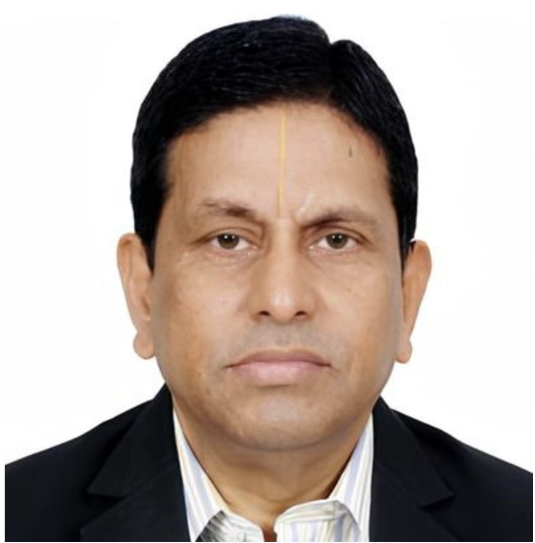 Affiliation: Professor (Retired) IIM Ahmedabad
Contact: nravi@iima.ac.in
Special track on Gita and its relevance to Personal and Professional excellence
Gita is one of the well-known ancient Indian texts used by several intellectuals across the world to draw their own inspirations from the text. The text is so open-ended so that we can draw many meaningful lessons, reflections based on this work. For the persons of Indian origin, Bhagavad Gita is a sacred text and is used as a religious material to reinforce the faith on Lord Krishna, the Supreme. As a part of this conference on MBCC 2026 (third edition), we are organising a special track on Gita and its relevance to individuals and professional in the everchanging modern context. The idea here is to explore how the multiple themes of Gita can be used to reshape, re-engineer and redesign our personal, professional, and community life. We believe such an approach will trigger a thought process as how we can conduct ourselves as better citizens, better human beings, better members of the community as a whole and better professionals. Half a dozen contributed papers, 10 invited talks by distinguished scholars is the core of this special track. In addition to this, there are two panels. One is on Bhagavad Gita and professional Excellence. The other one is on Artificial Intelligence and Consciousness.
Invited Talks
| S.no. | Speaker | Affilation |
|---|---|---|
| 1. | Laximidhar Behra | IIT Mandi |
| 2. | Swami Bhodamayananda | RK mission, Hyderabad |
| 3. | Dr MA Alwar | Sanaskrit Institute, Mysore |
| 4. | Dr Surya Tahora | SPJIMR, Mumbai |
| 5. | Bharat Bhushan Rath | RSU, Tirupati |
| 6. | Ramakrishnanada Chinmaya | Mission, Nagapattinam |
| 7. | Ramachandra, Arjun Kodagehalli | IIM Bangalore |
| 8. | Dr Sudha Seshayyan | Dean shastra university |
| 9. | Jaishanker Narayan | Ramana Ashram, Amba samudram |
| 10. | N Ravichandran | Professor (Retired) IIM Ahmedabad |
Panel 1 Gita and professional Excellance
| S.no. | Name | Affilation |
|---|---|---|
| 1. | Purushottam Basava | IAS (Retired) |
| 2. | Shiv Prasad | IAS (Retired) |
| 3. | Sri Prahlad Prabhu | BVI, gainesville, florida |
Panel 2 AI and Consciousness
| S.no. | Name | Affilation |
|---|---|---|
| 1. | Anil Maheswari | MIU, Iowa, USA |
| 2. | Dr Ashok Khmeka | IAS (Retired) |
| 3. | Dr Arnav Bhavsar | IIT Mandi |
Speaker's Bio
Prof. N. Ravichandran
Affiliation: Professor (Retired) IIM Ahmedabad
Contact: nravi@iima.ac.in
Professor N. Ravichandran retired from the top-ranked Indian Institute of Management, Ahmedabad, after serving for four decades. His consulting and research portfolio is primarily in the fields of Operations Management, Supply Chain Strategy, and good Governance. He also served as a transformative Director of IIM Indore for five years from 2008 to 2014. He received a prestigious Lifetime Achievement Award from the India division of the global. Academy of Management in 2025 for his contributions in institution building. He earned his Ph. D in Mathematics from the Indian Institute of Technology, Madras. In recent times, he is passionately exploring the relevance of ancient Indian literature for modern management thought. Topic: In this talk we explore what we can learn as individuals from three important sources of ancient intelligence and wisdom: developing intellectual maturity (from Panchatantra stories), a framework for managing our day-to-day life (Ramayana book 5, Sundra Kanda) and leadership tributes (from the life of Ramanuja, an erudite Vaishnavite scholar). Some of the specific topics we deal with include personality development and strategic thinking (from Panchatantra stories), managing emotions, bias for action (from Ramayana), leadership and societal development and creating and nurturing institution building (life of Ramanuja).
Dr. Bharat Bhushan Rath
Professor Bharat Bhushan Rath is a faculty member of the Department of Sanskrit Literature of National Sanskrit University, a Central University at Tirupati, Andhra Pradesh. He has eighteen years of teaching and research experience. Professor Rath, a recipient of the Yuva Puraskar by the Kendriya Sahitya Akademi, has authored ten books in Sanskrit Language and four books in Odia language. His Sanskrit poetry “Vanavaibhavam”, Sanskrit research book “The importance of Sanskrit in contemporary society”, Odia research book “Sri Nilamadhava and Sri Jagannath” and Odia novel “Lalita” are popular among the readers. Professor Rath has studied PG Diploma in Yoga Therapy and Stress Management. He is a regular practitioner of Yoga and promotes Yoga in the society. The book “Yoga Vijnana” written by him is useful for students. He is a live commentator on the Rath Yatra of Puri Jagannath on various TV channels. He is also a live commentator on the Venkateswara Bhakti Channel of Tirumala Tirupati Devasthanams, Tirupati. Many of his talks on Shrimad Bhagavad Gita, especially in Sanskrit and Odia languages, have been popular. He has been appointed to several research projects by the Government of India. Among them, he was appointed as addl. co-coordinator for the publication of the unpublished manuscripts of Sri Ramanujacharya. He is a regular columnist in famous Odia daily newspapers. He is particularly active in the field of Sanskrit language, Sanatana Dharma and forest protection. Apart from this, he is also the Director of the Odisha Chair and Deputy Director of Center for Distance and Online Education of his University. Ten researchers have obtained PhD degrees under the guidance of Professor Rath. He has been awarded by many prominent institutions for his work in the fields of Education, Sri Jagannath culture and Forest.
Abhisek Verma
Abhisek pursued his undergraduate and postgraduate studies in International Relations from Banaras Hindu University. He has volunteered for spiritual organisations and avidly participated in talks and lectures by Sanyasis. During the pandemic, he had the chance to read Vedic literature more closely, assisting the editorial team on the book titled Five Aspects of Absolute Truth: A Bhagavad Gita Study Guide while working at IIT Kanpur. Currently, he is a research assistant at IIM Ahmedabad.
Simlee Bhattacharyya
Simlee has built a distinguished banking career over the past decade at the State Bank of India, navigating domains ranging from FOREX Operations to SME Finance. With a Postgraduate Degree in Analytical & Applied Economics, she combines intellectual rigour with practical insight. Away from the professional sphere, reading and photography remain her cherished creative pursuits.
Prof. Haripriya Rengarajan
Prof. Haripriya Rengarajan is an academic, researcher, author, and management professional with extensive industry experience spanning leadership development, organizational behavior, and strategic management. With a strong professional foundation built through several years in the corporate sector, she brings a practical perspective to her academic and research pursuits. Her work focuses on ethical leadership, emotional intelligence, decision-making, and responsible innovation, particularly within the IT and healthcare domains. She is deeply interested in the intersection of management studies and Indian knowledge systems, drawing interpretive insights from ancient Indian literature to understand leadership, human behavior, and emotional balance. She has authored scholarly and interpretive works on leadership psychology, ancient Indian literature, and the role of the three guṇas—sattva, rajas, and tamas—in personal and organizational life. Her research also extends to yoga-based emotional well-being interventions for adolescents and educational transformation through value-based learning. In addition to her academic research, she has delivered visiting lectures and invited sessions at management institutions on leadership, governance, ethics, emotional resilience, and applied Indian philosophy. Her work seeks to bridge classical wisdom with contemporary organizational challenges, creating meaningful dialogue between tradition and modern management practice.
Ms. Shilpa Bhatia
Advocate, High Court of Bombay Qualifications: B.A. (Hons), St. Xavier’s College; Diploma in Personnel Management (XIM); LL.B. and LL.M., Mumbai University. Specialisation: HR Law, Labour & Industrial Litigation, POSH Investigations, Legal Advisory. Ms. Shilpa Bhatia is an Advocate at the Bombay High Court with over 25 years of experience in Human Resources law, labour and industrial litigation, POSH investigations, and advisory. She regularly appears before the High Court, Labour Courts, Industrial Tribunals, and CGIT, representing leading corporate clients. POSH External Member: She serves as External Member on Internal Committees (Sexual Harassment Law) of several listed and unlisted companies like the Phoenix Mills, Brookfield Asset Management, The Leela Hotel, Evonik India, USV Pvt. Ltd. amongst others and has previously worked with organisations such as DBS Bank, Lupin, Lintas and Sun Pharma. She has also been a Member of the Sexual Harassment Committees for the Labour & Industrial Tribunal, Mumbai (2012–2014)and the District Sexual Harassment Committee for the Labour & Industrial Tribunal(2020–July 2025). POSH Trainer: Ms. Bhatia conducts POSH workshops and gender-sensitivity training for corporates and institutions including Adani Electricity, IIT Mumbai, IIM Mumbai, St. Xavier’s College, Vetoquinol, Worley and others. She also conducts domestic enquiries for corporates and educational institutions. Independent Director: Bliss GVS Pharma Ltd., Aeroflex Industries Ltd., and AMJ Land Holdings. Achievements: All India 3rd Rank (Best Cadet), Republic Day Parade 1988; Duke of Edinburgh Silver & Bronze Medals. Former Rotaract District Secretary (Dist. 3140), President, Rotaract Club (Best President Award); represented India in Rotary Exchange Programs (UK) & the Group Study Exchange Program (Pittsburgh, USA). Editor of publications at St. Xavier’s College and Government Law College. Author of Bare Acts with Notes on the Indian Christian Marriage Act, 1872 and Parsi Marriage & Divorce Act, 1936. Spiritual Student of Sri Aurobindo's Integral Yoga.
Bhodha Mayananda
Inspired by the teachings of Sri Ramakrishna and Swami Vivekananda during his school days, Swami Bodhamayananda joined the Ramakrishna Order in Bangalore in 1984 and was initiated into monastic vows in 1993. After initial training, he served the Mission in Hyderabad, Visakhapatnam and Chennai between 1989 and 2010 and was involved in various youth activities during that period. From May 2010 till April 2022 he served as the Director, Vivekananda Institute of Human Excellence, a unit of Ramakrishna Math, Hyderabad, a unique and very dynamic institute to fulfill Swami Vivekananda’s vision of character building and service focused on school children and the youth of the country. From July 4th, 2022 he is serving as the Adhyaksha of Ramakrishna Math, Hyderabad. The Ramakrishna Math in Hyderabad is a fifty-year-old centre with immense potential running a Vivekananda Institute of Languages, Vivekananda Institute of Human Excellence, 300 Telugu publications house, a health centre with 32 departments for the health care of poor people, rural development service and a beautiful temple for worship, meditation and spiritual events. Thousands of youth and devotees participate in the activities every day. Swami Bodhamayananda has so far conducted about 1,050 workshops, seminars and training sessions covering about 7 lakh students, teachers, managers and others on “Human Excellence, Self-Management, Leadership Skills and Vedanta” in schools, professional colleges and many corporates in almost every state in the country since two decades. He has also interacted with several scientists at Abdul Kalam Research Centre & DRDO in Hyderabad, ISRO in Bengaluru, advocates of Andhra Pradesh & Telangana High Courts in Hyderabad, several management associations, executives of public sector undertakings, chartered accountants and a couple of IITs and IIMs in the country. At the Vivekananda Institute of Human Excellence, Hyderabad, which is a premier institute for youth empowerment in Hyderabad, he has taken the initiative to encourage, recognize and appreciate the leadership qualities amongst the youth and has trained nearly 5,000+ youth in the Swami Vivekananda way for character building and service to the country. His lectures and interviews are uploaded on YouTube channels for the benefit of the youth.
Dr. Surya Tahora
Surya Tahora is a professor at SP Jain Institute of Management and Research (SPJIMR), Mumbai, India, where he specializes in integrating ancient wisdom traditions, ethical leadership, mindfulness, and neurosciences into contemporary management education. He also serves as the Executive Director of the Centre for Wisdom in Leadership (CWIL) at SPJIMR, whose objective is to disseminate ideas and interventions for more responsible and sustainable society by bringing together the domains of leadership and traditions of wisdom, from East to West, and bridging the gap between wisdom researchers and organizations. With a rich academic background in Indian Philosophy (Advaita Vedanta) and business experience in organisations in Europe and Asia, Surya has extensively engaged in translating profound philosophical teachings from wisdom traditions, into actionable insights for MBA and Executive MBA students. His leadership development workshops for organisations uniquely blend rigorous academic inquiry with practical experiential learning, enabling participants to embed wisdom principles, mindfulness, ethical clarity, meaningful engagement and resilience into organizational culture and leadership behaviours.
Shiv Prasad
A Civil Servant by profession with over 30 years of rich cross-functional experience in Indian Administrative Service (IAS) and an Engineering graduate in Computer science from NIT Warangal. With roots in Andhra Pradesh and having served in Punjab and Delhi during these three odd decades, got tremendous exposure to different cultures and tendencies. Gained insights into Government functions through exposure both at gross roots and headquarters level which helped me to execute some prestigious projects which brough change in the lives of people. This was possible because of motivation of employees, integrity, personal commitment and transparency. These experiences with people and situations led me to move deep into decision making process which is the hallmark of a Civil Servant and studied Judgement and Decision Making, Behavioural Sciences and various western motivational theories. All of these culminated to take up deep study of the Bhagavad Gita to realise that Gita contains all of this. Published a book titled Gita Acharan- A Practitioner’s Perspective which is translated into different languages which include Hindi, Punjabi, Odia, Bengali, Gujarati, Marathi, Telugu and Urdu. INTEREST AREAS: Every aspect of life which can bring joy to the lives of people and bring new lease of life to the institutions. This broadly includes spreading the message and teaching of the Bhagavad Gita.
Gaurav Rastogi
Gaurav Rastogi teaches and writes across Hindu philosophy, contemplative practice, artificial intelligence, and the structure of risk in modern institutions. He builds at the same intersection: as an AI startup founder, as Founder and Trustee of the Living Deeply Foundation, and as creator of Sūtrakṛt-Gītā (gita.ekrasworks.com), a doctrine-neutral scholarly edition of the Bhagavad Gītā that places the readings of six classical schools – Śaṅkara, Rāmānuja, Madhva, Vallabha, Śrīdhara, and Madhusūdana – in parallel without privileging any one. He is Trustee, Board Treasurer, and Chair of the Finance Committee at the Graduate Theological Union in Berkeley, CA; Board Member, Dean, and Resident Faculty at the Hindu Spiritual Care Institute; Faculty Lecturer in foundational Hindu philosophy at The Chaplaincy Institute; and a member of the editorial board of Kutumba: The Journal of Hindu Spiritual Care. He teaches as Visiting Faculty at the Indian Institute of Management Ahmedabad and at Ashoka University, where his current courses examine AI's effects on leadership, attention, and the structures that sustain professional life under acceleration. His books include Global Business in the Age of Destruction and Distraction (Oxford University Press, 2022), Offshore: India's Services Juggernaut (Penguin, 2012), and Unplug and Go Deep Within (2016); he also contributed to Leadership@Infosys (Penguin, 2010). He holds an MBA from the Indian Institute of Management Ahmedabad and a B.E. in mechanical engineering from Delhi College of Engineering (now DTU). He is an E-RYT 500 yoga teacher of fifteen years' standing, with advanced training in dhyāna. His current research develops Trigunametry, a structural framework for classifying risk-taking derived from the triguṇa taxonomy of the Bhagavad Gītā 18.23–25 and integrated with neurochemical research on dopamine and adrenaline.
Ramakrishnananda
Swami Ramakrishnananda serves as the resident spiritual guide of Chinmaya Mission, Nagapattinam, where a flourishing Chinmaya Vidyalaya also functions under his guidance. Inspired by Pujya Gurudev Swami Chinmayananda, he joined Chinmaya Mission in 1992 and pursued an in-depth study of Hindu scriptures and Sanskrit at Chinmaya Sandeepany, Chennai. He has served in several Chinmaya Mission centers, including Trichy, Coimbatore, and the Reunion Islands. He also travels frequently to the United States to share Vedantic teachings. Swami Ramakrishnananda is the author of the Chinmaya International Foundation’s Easy Sanskrit Course, through which thousands of students across the world have been benefited. He regularly conducts discourses on the Upanishads, Bhagavad Gita, Ramayana, Mahabharata, and other Vedantic scriptures. In 2016, as part of the birth centenary celebrations of Swami Chinmayananda, he coordinated the Guinness World Record event for the world’s largest colour-water mosaic. With a vision to uplift rural communities, he has been renovating dilapidated temples in the interior villages of the Nagapattinam district. He has completed the restoration of about 50 temples so far, bringing immense spiritual and cultural revitalization to the villages. At present, he is pursuing his PhD at Amrita Vishwa Vidyapeetham on the topic “The Elements of Advaita Philosophy in Kamba Ramayana.”
M A Alwar
Dr. M A, Alwar is a traditional Sanskrit scholar specialising in Sanskrit literature, various branches of Indian philosophy and the Indian knowledge systems. He is currently working as the Professor of Indian logic at the Maharaja Sanskrit College that is affiliated to the Karnataka Sanskrit University. He is also heading a department in the University of Trans-disciplinary Health sciences & Technology. This department deals with the theoretical foundations of Ayurveda, apart from documenting, cataloguing and publishing ancient Palm leaf manuscripts on Indian systems of medicine. He also heads the Samskriti Foundation, situated at Mysore and Melkote as its Managing trustee. Samskriti Foundation is involved in the preservation and propagation of the cultural and scientific heritage of India. Dr. Alwar is also active in transdisciplinary and multidisciplinary research concerning Indian knowledge systems and other branches of science and technology. He has authored and published several books pertaining to various branches of the Indian knowledge systems and has attended seminars and conferences all over India. He’s also a sought-after person for his expert views on various aspects of Indian culture and heritage.
Dr. Akhaya Kumar Nayak
Dr. Akhaya Kumar Nayak is a faculty member in the area of Humanities and Social Sciences (Sociology). He has earned his doctorate degree from Indian Institute of Technology Kanpur in 2013. His teaching interests include Ethics and Corporate Social Responsibility, Leadership Insights from Vedic Scriptures (especially Bhagavad Gita), Sociological Perspectives, Indian Society and Culture, Contemporary Social Issues, Industrial Sociology, and Essentials of Human Values. His research interest lies in Sociology of Social Movement, Sociology of Development, and Ethics and Corporate Social Responsibility. His research papers are published in several International and national journals. He has presented research papers in various conferences in India and abroad (UK, USA, Austria, Portugal, Greece, France, Poland, etc.). He has been awarded National Scholarship for undergraduate studies, and Literary Champion during B.Ed. Publications in International Peer Reviewed Journals: Swain, B., Nayak, A. K. and Panigrahi, P.K. (2021). Uber: Riding on Responsibility or Irresponsibility?. Journal of International Business Education, Volume 16; Nayak, A. K., Panigrahi, P. K., & Swain, B. (2020). Self-help groups in India: challenges and a roadmap for sustainability. Social Responsibility Journal. 16(7), 1013-1033. (Received Emerald Literati Outstanding Paper Award).; Nayak, A. K., & Panigrahi, P. K. (2020). Participation in Self-Help Groups and Empowerment of Women: A Structural Model Analysis. The Journal of Developing Areas, 54(1), 19-37; Nayak, A. K., & Pattnaik, B. K. (2019). SHG s and SHG Banking in Odisha: A Government Programme, a Social Movement, or a Hybrid?. Asian Journal of Social Science, 47(1), 110-139; Nayak, A. K. (2018). Indian women in grassroots socio-political institutions: impact of microfinance through self-help groups. International Journal of Indian Culture and Business Management, 17(4), 383-402; Nayak, A. K. (2018). Effective leadership traits from Bhagavad Gita. International Journal of Indian Culture and Business Management, 16(1), 1-18. Publications in National Peer Reviewed Journals: Nayak, A. K. and Nath, S. (2018). There is an urgent need to humanize childbirth in India, Economic and Political Weekly, 53 (2) Available at: https://www.epw.in/engage/article/urgent-need-to-humanise-childbirth-in-india; Nayak, A. K. (2015). Developing Social Capital through Self-help Groups. Indore Management Journal, 7(1), 18-24.
Anil Maheshwari
Dr Anil K. Maheshwari is a Professor of Management and Information Systems at Maharishi International University, USA, the home of consciousness-based education. He earned a B. Tech in Electrical Engineering from IIT Delhi, an MBA from IIM Ahmedabad, a PhD in Management from Case Western Reserve University, Ohio, and an MA in Vedic Science from MIU. He is a 40-year practitioner of Transcendental Meditation and advanced techniques. As a scholar and seeker at the intersection of leadership, technology, and spirituality, he has contributed 20 books and textbooks, 50 papers and book chapters, and made 70 conference presentations and webinars, including at Harvard University. His book Data Analytics Made Accessible is the #1 recommended book globally. His academic edited books include a 2-volume compendium on a paradigm of consciousness-based leadership, and a book on the interplay between AI and Consciousness. He is the incoming Chair of the Management, Spirituality and Religion (MSR) division of the Academy of Management. He brings 20 years of IT industry experience including 9 years in leadership roles at IBM. He blogs on Blissful Living at anilmah.com
Dr. Ashok Khemka
Dr. Ashok Khemka is a distinguished former Indian Administrative Service officer, technologist, and public intellectual whose career spans governance, computer science, economics, law, and public policy. A graduate of Indian Institute of Technology, Kharagpur with distinction in Computer Science & Engineering, he earned his Ph.D. in Computer Science from Tata Institute of Fundamental Research, where his research focused on real-time distributed and multiprocessor scheduling systems. Over a 34-year career in public service, Dr. Khemka held leadership positions across diverse sectors including administrative reforms, information technology, public finance, education, agriculture, transport, housing, rural and urban development, cooperatives, and youth affairs, eventually retiring in the rank of Chief Secretary, Government of Haryana. Dr. Khemka’s intellectual interests extend beyond governance and technology into broader philosophical and civilizational questions concerning ethics, public reason, human agency, institutional integrity, and consciousness in contemporary society. His interdisciplinary academic training in computer science, economics, management, and law informs a uniquely integrative perspective on the relationship between mind, intelligence, systems, and human values. His reflections on consciousness emerge from a dialogue between computational systems, philosophical inquiry, public life, and the enduring question of human agency in an increasingly algorithmic age. He has undertaken advanced professional programmes at institutions including Harvard Kennedy School, University of California, Berkeley, World Bank Institute, International Monetary Fund, and the London School of Economics and Political Science under the Chevening Gurukul Programme in Globalization and Leadership. His published work spans scientific research in distributed computing and real-time systems, as well as essays and policy writings on economics, governance, technology, intellectual property, climate policy, agriculture, public welfare, and institutional accountability in leading national newspapers and journals. Dr. Khemka is the recipient of several recognitions, including the S.R. Jindal Award for Crusade Against Corruption (2011 & 2012) and the Excellence in Public Service Award conferred by the Manjunath Shanmugam Trust.
Jaishankar Narayan
Jaishankar is a sishya of Pujya Swami Dayananda Saraswati ji and has undergone a three-year residential Vedanta course with Pujya Swamiji at Arsha Vidya Gurukulam (AVG), Anaikatti, Coimbatore, India from 1995-1998. An alumnus of IIT-BHU Varanasi, Jaishankar graduated as an Engineer and was working in India and later USA as a Software Engineer. He met his Guru Pujya Swami Dayananda ji first at Arsha Vidya Gurukulam, Saylorsburg, PA at USA and then decided to study Vedanta with Pujya Swamiji. After completing the three-year residential course at AVG, Anaikatti, Jaishankar married Srividya who was also a student of the same course, as per Pujya Swamiji’s wishes. Jaishankar settled in Chennai after the course and was teaching Vedanta and Samskritam to interested people. Jaishankar and Srividya were doing Seva work near Chennai under the banner of AIM for Seva as per the wishes of their Guru. In 2004 Pujya Swamiji asked Jaishankar to take over the administration of AIM for Seva full time. In the meantime, the Tsunami struck and from that day Jaishankar and Srividya started working full time for Tsunami Relief and Rehabilitation under AIM for Seva. Jaishankar worked as Joint Secretary AIM for Seva for nearly 3 years and was responsible for expanding the main program of AIM for Seva - Free Students Home for Children in rural areas, across India. Pujya Swamiji asked Jaishankar and his Gurubhai Kalyankumar to buy some land in a rural area and build a Gurukulam around 2010. As a tribute to his Guru, Jaishankar along with Kalyankumar and Srividya, is now building Aarsha Vidya Varshini Gurukulam at Dakshinamurthy Sarovar, Therku Pappankulam, Kallidaikurichi, Tirunelveli District, India. The plan is to build a Gurukulam with rooms, lecture hall, kitchen and dining facilities for 50 people to stay and study. At present there is a temple for Vallabha Mahaganapati, Sharadamba, Adi Shankaracharya, Narmadeshvara and Venugopala Swami and a Goshala for the protection of desi cows, with more than 50 cows and calves. A Guest house has been built for visitors to stay at the Gurukulam. Jaishankar plans to teach Vedanta and Sanskrit primarily for adults but also plans to have yoga camps, children’s camps and youth camps in future. As of now he is conducting online classes on Vedanta, Samskritam and chanting.
Anirudh Sharma
Dr. B G Anathsharma
I have undergone the traditional gurukula system of education for twelve years from the age of ten, which included the study of Vedas, Śāstras, Yoga, fine arts and modern sciences. During this period, alongside my gurukula education, I earned a Bachelor’s degree and two Master’s degrees. Later, after being awarded the JRF, I completed my research work in the field of Advaita Vedanta and was awarded a doctoral degree for the same. Currently, I am working as an Assistant Professor at the Center for Indian Knowledge Systems within the School of Art, Humanities & Social Sciences, Chanakya University, Bengaluru since December 2025. My research interests include Bhāratīya Darśanas, Advaita Vedanta, India Studies, Social Narratives in Indian Context, Cultural Studies, Indian Classical Music.
Priyankari
Priyankari is a PhD scholar at IIT Mandi’s Indian Knowledge System and Mental Health Applications (IKSMHA) Centre, where her research explores acoustic and vocal articulation patterns, neurobiological mechanisms, and their implications for mental and cognitive health. With interdisciplinary training in biotechnology, fine arts, music, and Indian knowledge systems, she combines scientific rigor with artistic practice. She has research experience in molecular biology, genomics, bioinformatics, and environmental science, and has published work in biotechnology and agriculture. A trained Bharatanatyam dancer, Carnatic vocalist, yoga instructor, and therapist, she actively promotes holistic approaches to health, education, and human well-being.